




Introduction
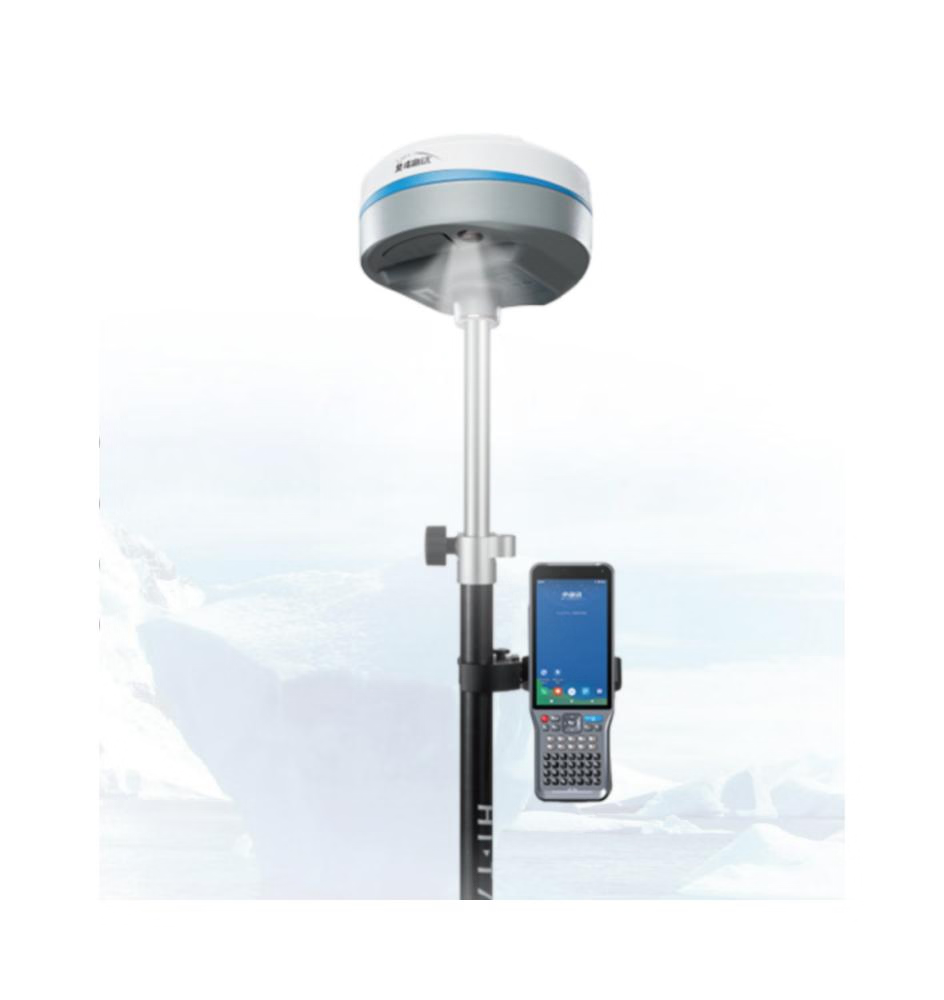
A GNSS RTK receiver is one of the most powerful tools for achieving centimeter-level accuracy in surveying, construction, agriculture, and geospatial mapping. However, even advanced users can experience errors if proper procedures are not followed. Understanding the Common Mistakes to Avoid When Using a GNSS rtk receiver can significantly improve accuracy, efficiency, and reliability in the field.
This article highlights the most frequent errors users make and how to prevent them for better performance.
1. Poor Base Station Setup
One of the biggest errors in RTK surveying is improper base station installation. The base station must be placed in a stable, open-sky environment with minimal obstructions.
Common issues include:
- Setting the base too close to buildings or trees
- Incorrect coordinate input
- Unstable tripod placement
When the base station is not correctly configured, the rover’s accuracy is immediately compromised, making this one of the Common Mistakes to Avoid When Using a GNSS RTK Receiver.
2. Ignoring Satellite Visibility and Environment
GNSS RTK performance heavily depends on satellite signals. Obstructions such as tall buildings, dense foliage, or terrain variations can cause multipath errors and signal loss.
To improve results:
- Always check satellite availability before starting work
- Avoid working in urban canyons when possible
- Use sky-view planning tools if available
Failing to consider the environment is another major issue in the Common Mistakes to Avoid When Using a GNSS RTK Receiver.
3. Incorrect Communication Between Base and Rover
RTK systems require constant, stable communication between the base and rover units. Many users overlook this setup step.
Typical mistakes include:
- Wrong radio frequency configuration
- Weak internet connection in NTRIP setups
- Mismatched correction data formats
Without proper communication, real-time corrections fail, making this one of the most critical Common Mistakes to Avoid When Using a GNSS RTK Receiver.
4. Not Calibrating or Checking Equipment Regularly
Another frequent issue is neglecting routine calibration and maintenance. Even high-end GNSS equipment can drift or degrade over time if not properly maintained.
Best practices include:
- Regular firmware updates
- Checking antenna alignment
- Verifying coordinate systems before fieldwork
Skipping these steps contributes significantly to errors and is among the overlooked Common Mistakes to Avoid When Using a GNSS RTK Receiver.
5. Using Incorrect Coordinate Systems
A surprisingly common mistake is selecting the wrong coordinate reference system (CRS). This can result in offsets of several meters, even when RTK is functioning properly.
Always ensure:
- CRS matches project requirements
- Transformation parameters are correctly applied
- Local grid systems are verified
This technical oversight often leads to confusion and is a key part of the Common Mistakes to Avoid When Using a GNSS RTK Receiver.
Conclusion
A GNSS RTK system can deliver extremely high accuracy, but only when used correctly. From base station setup to coordinate system selection, each step plays a crucial role in performance. By understanding and avoiding the Common Mistakes to Avoid When Using a GNSS RTK Receiver, users can ensure more reliable data, fewer field errors, and improved productivity in every surveying project.
